
Put AI to work — safely, practically, and on purpose.
BrainRevelocity helps growing organizations move from scattered AI experiments to secure, useful capabilities that improve how work gets done.
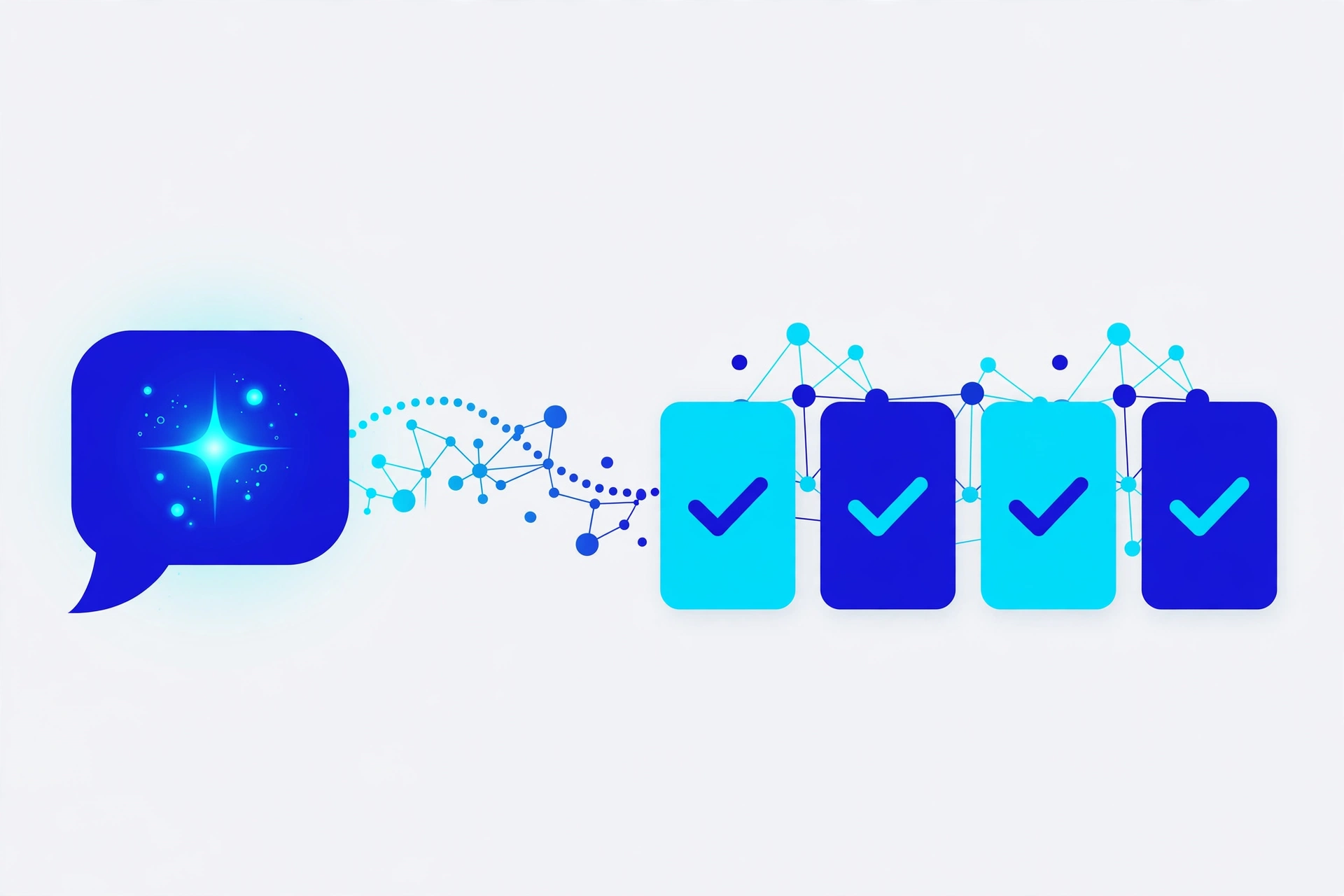
AI becomes valuable when it fits the business around it.
A promising tool can still create risk, confusion, or cost when the data is not ready, permissions are unclear, and teams do not know where it belongs. We bring business priorities, technology, security, and adoption into one practical program.
Business value first
Start with work worth improving. Focus on repeatable, high-friction workflows where better information, faster decisions, or guided automation can create a meaningful result.
Trusted foundations
Prepare access before expansion. Review identity, permissions, information quality, data exposure, integration points, and the controls already protecting the environment.
Human adoption
Design for the people using it. Give each role clear scenarios, safe operating guidance, training, and support so AI becomes part of real work instead of another unused tool.
Ongoing control
Manage AI as a living system. Monitor quality, security, usage, cost, and change. Keep ownership visible and improve the system as the organization evolves.
A practical AI program, not an open-ended experiment.
Begin with readiness. Launch a controlled use case. Help people adopt it. Then govern and extend what proves useful.
AI Readiness Assessment
Turn AI ambition into a decision-ready roadmap. We examine business priorities and workflows, data and knowledge, identity and permissions, technology fit, risk and governance, and adoption readiness.
- Prioritized opportunity map — a ranked set of practical use cases based on value, effort, risk, and readiness.
- Readiness and risk findings — a clear view of gaps across data, permissions, security, process, and adoption.
- 90-day action plan — recommended next steps, owners, dependencies, controls, and measures of success for the first release.
Microsoft 365 Copilot deployment & adoption
Go beyond license activation. Build confident, secure adoption: confirm the foundation, pilot with defined roles, make use practical, then measure what changes.
- Foundation review — licensing, identity, permissions, information exposure, sharing practices, and security controls.
- Controlled pilot — participants and scenarios, guardrails, environment configuration, and a feedback loop.
- Role-based adoption — onboarding, scenario libraries, coaching, office hours, and internal champions.
Custom AI agents
Design agents around a workflow — not a demo. A useful agent has a defined job, approved information, clear boundaries, and a reliable path back to a person.
- Discover — map the workflow, users, inputs, decisions, exceptions, and measurable result.
- Prototype — build a narrow version, connect only approved sources, and test with realistic cases.
- Release — add controls, observability, support, and change management before broader use.
Managed AI governance
Keep control as AI use grows. A regular operating cadence for the AI environment so leaders can expand capability without losing visibility.
- Access and data controls — reviews of access, sharing, classification, retention, and approved information.
- Inventory and ownership — a current register of approved tools, copilots, agents, data connections, owners, and purposes.
- Quality, risk, and cost — review standards, incident handling, adoption tracking, licensing, and vendor change.
Not every workflow needs an agent. When a conventional automation is simpler, safer, or easier to maintain, we will recommend it.
Build confidence in stages.
Start small enough to learn. Design well enough to scale. Bring one priority workflow, one group of users, or one AI decision — we will help define the safest useful next step.
Choose the right opportunity
Align goals, workflows, data, risk, platforms, and measures of success.
Launch a controlled pilot
Configure access, connect approved information, test realistic scenarios, and set guardrails.
Make it part of work
Train by role, support users, collect feedback, and improve the workflow.
Govern and extend
Monitor quality, risk, usage, and cost; scale what works and retire what does not.
Questions leaders ask before moving forward.
Do we need a complete AI strategy before we begin?
No. A focused assessment can establish priorities, boundaries, and a first pilot while creating the foundation for a broader strategy.
Can you help if employees are already using public AI tools?
Yes. We can inventory current use, identify risk, clarify acceptable practices, and define an approved path that is practical for employees.
What is the difference between Copilot, automation, and an AI agent?
A copilot assists a person inside their work. Automation follows predefined rules. An AI agent can interpret context and coordinate a bounded sequence of steps. The right choice depends on the workflow, risk, and level of human oversight required.
How do you protect sensitive information?
We design around identity, least-privilege access, approved data sources, classification, retention, logging, testing, and human review. The exact controls depend on the platform and the information involved.
How will we know whether an AI initiative is working?
Before launch, we define operational measures appropriate to the use case — such as quality, cycle time, adoption, rework, cost, or service experience — and review them alongside risk and user feedback.
Can you support AI after the initial deployment?
Yes. Managed governance can cover portfolio visibility, access reviews, quality and risk monitoring, adoption, cost, vendor change, and the lifecycle of copilots and agents.
Make the next AI decision with clarity.
Start with an AI readiness conversation. We will help identify the opportunity, the guardrails, and the practical next step.
Book an AI readiness conversation